Lev8 Naturally
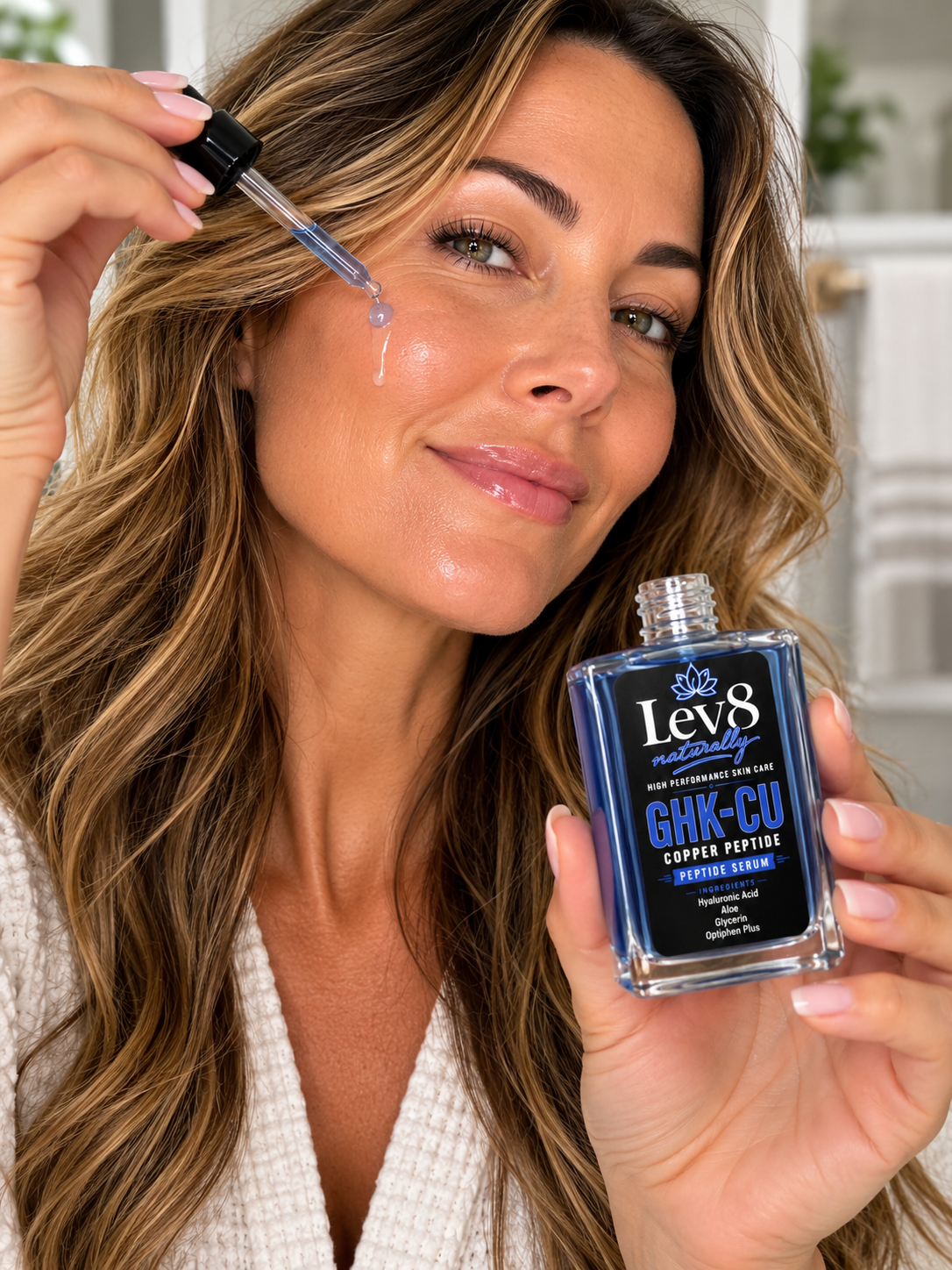
GHK-Cu Copper Peptide Serum
GHK-Cu Copper Peptide Serum
Couldn't load pickup availability
GHK-Cu (Copper Peptide) is one of the most researched cosmetic peptides for skin rejuvenation. It works by acting as a cellular signaling molecule that tells the skin to shift into a repair and regeneration mode.
See how to Use GHK-CU Below
How GHK-Cu Helps Repair Skin
1. Stimulates Collagen Production
As we age, collagen production slows down. GHK-Cu signals fibroblast cells to produce more:
Collagen types I and III
Elastin
Glycosaminoglycans (including hyaluronic acid)
This can help:
Reduce the appearance of fine lines and wrinkles
Improve firmness and elasticity
Support smoother skin texture
2. Speeds Wound Healing
GHK-Cu helps coordinate the skin's natural healing response by:
Encouraging new tissue formation
Supporting healthy blood vessel growth
Helping damaged skin repair more efficiently
This is why it is often used after cosmetic procedures such as microneedling and resurfacing treatments.
3. Reduces Inflammation
Chronic inflammation accelerates skin aging. GHK-Cu has been shown to:
Calm inflammatory signals
Reduce redness
Support recovery from environmental stressors
This makes it attractive for sensitive, stressed, or mature skin
4. Increases Antioxidant Defenses
GHK-Cu helps boost the skin's natural antioxidant enzymes, including:
Superoxide dismutase (SOD)
Catalase
These help neutralize free radicals generated by:
UV exposure
Pollution
Normal aging
5. Supports Skin Barrier Function
A healthier barrier means:
Better moisture retention
Less dryness
Improved resilience against environmental damage
Many users notice skin feels more hydrated and plump after several weeks of use.
6. May Improve Scar Appearance
Research suggests GHK-Cu can help remodel damaged tissue by:
Supporting healthy collagen organization
Encouraging more normal skin regeneration
This may gradually soften the appearance of:
Acne scars
Surgical scars
Minor skin damage
Why It's Called a "Copper Peptide"
GHK is a naturally occurring peptide composed of three amino acids:
Glycine
Histidine
Lysine
When it binds to copper ions, it forms GHK-Cu, which is the biologically active complex used in skincare.
How to Use · Routine Guide
Patch Test First (Always)
Before adding any new active to your routine, apply a small amount of serum to the inner forearm or behind the ear. Wait 24–48 hours. If you notice significant redness, itching, or irritation, discontinue use and consult a dermatologist. This step is especially important if you have sensitive or reactive skin.
Suggested Routine
| Step | Morning | Evening |
|---|---|---|
| 1 | Gentle cleanser | Gentle cleanser |
| 2 | Toner / hydrating mist (optional) | Toner / hydrating mist (optional) |
| 3 | GHK-Cu Copper Peptide Serum | GHK-Cu Copper Peptide Serum |
| 4 | Moisturizer or tallow balm* | Moisturizer or tallow balm* |
| 5 | SPF 30+ sunscreen | — |
*See tallow layering note below.
General Application
Apply 2–3 drops to clean, slightly damp skin. Gently press into the face and neck. Allow 60–90 seconds to absorb before applying moisturizer or a facial oil/balm.
Skin Types
GHK-Cu is generally well-tolerated across skin types. Those with dry or mature skin often find it particularly supportive of barrier repair and firmness. Those with oily or acne-prone skin should introduce it gradually (start with evenings only) and monitor for changes.
Ingredient Compatibility
✔ Tallow Balm — Generally Compatible
Many customers ask about layering copper peptides with tallow-based moisturizers. Apply the GHK-Cu serum first, allow it to fully absorb (60–90 seconds), then apply tallow balm on top as an occlusive layer. This order keeps the active peptide in direct contact with the skin before the heavier balm seals in moisture. Start with a small amount of tallow to ensure your skin tolerates the combination well.
⚠ Vitamin C (L-Ascorbic Acid) — Use With Caution / Separate
Copper ions can interact with high-concentration, low-pH vitamin C (L-ascorbic acid), potentially reducing the effectiveness of both ingredients. If you use a potent vitamin C product, consider applying it at a different time of day — for example, vitamin C in the morning and GHK-Cu in the evening. Gentler vitamin C derivatives (such as ascorbyl glucoside or sodium ascorbyl phosphate) are thought to be less likely to interact, though individual results may vary.
⚠ Retinol / Retinoids — Introduce Carefully
Both retinol and copper peptides are potent actives. Using them together — especially when you are new to either ingredient — may increase the likelihood of skin sensitivity, dryness, or irritation. A common approach is to alternate nights (retinol one night, GHK-Cu the next) rather than layering both in the same session. If your skin tolerates both well over several weeks, you may cautiously try combining them, always following with a good moisturizer.
✔ Hyaluronic Acid, Niacinamide, Ceramides — Compatible
These hydrating and barrier-supporting ingredients pair well with GHK-Cu and can be used in the same routine without concern.
These suggestions are general skincare guidance only and are not medical advice. Individual skin responses vary. If you have a diagnosed skin condition or are under a dermatologist's care, please consult your provider before introducing new actives.
Share